What Is Hydro Excavation? A Cleaner, Safer Way to Dig Around Underground Utilities
Digging around buried utilities is one of those jobs where “close enough” is definitely not good enough.
Gas, electric, fiber, water, and sewer lines can all be sitting under the same job site. Some are marked well. Some are not. Some private lines may not show up on the usual utility markings at all. Hit one with a bucket or trenching machine, and the job can turn into a safety issue, a delay, and a serious repair bill.
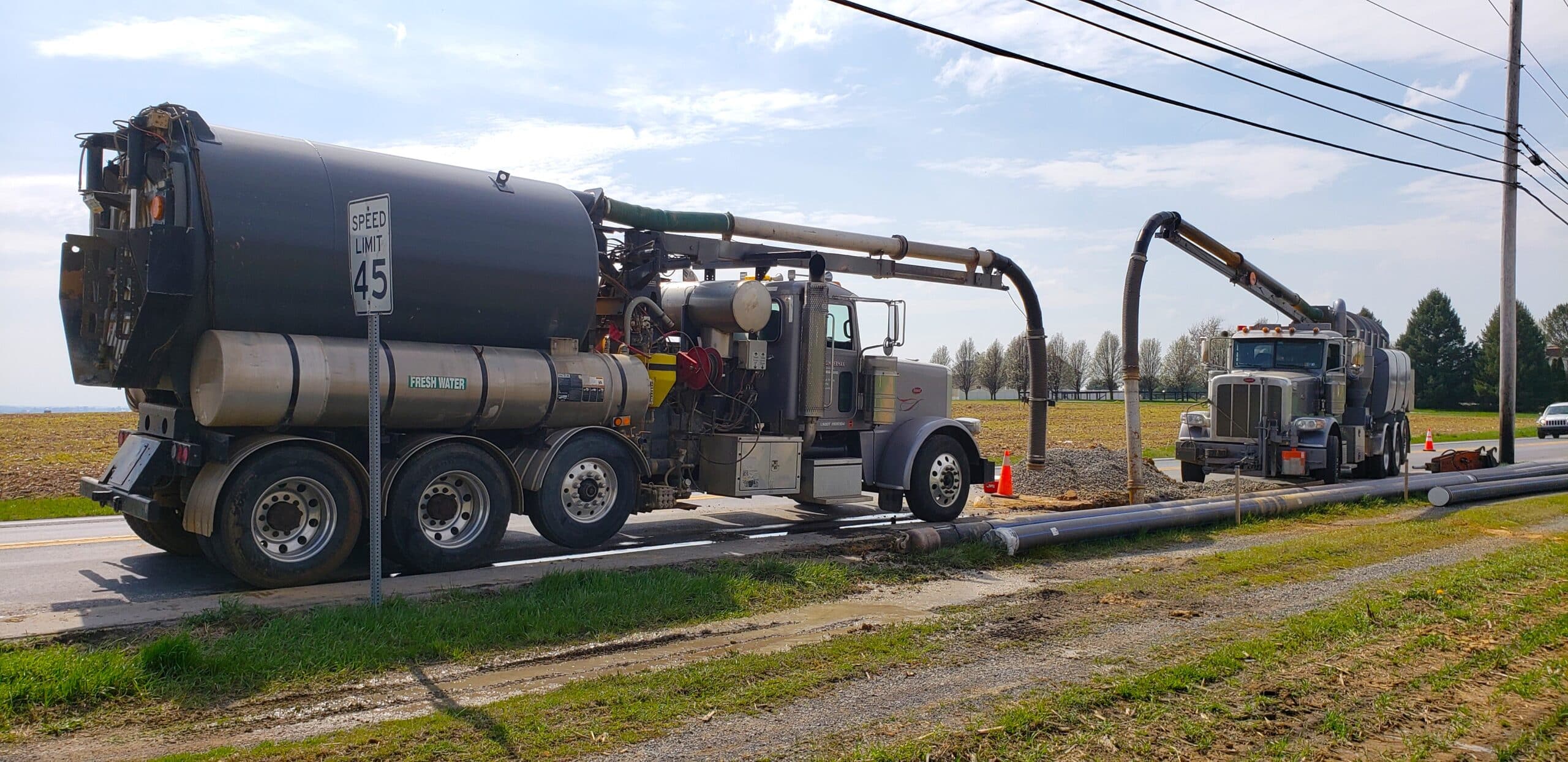
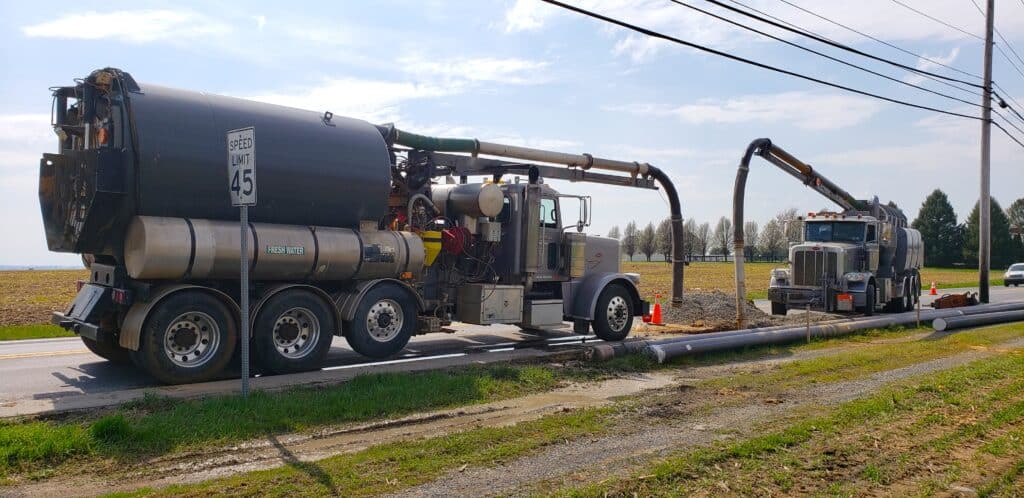
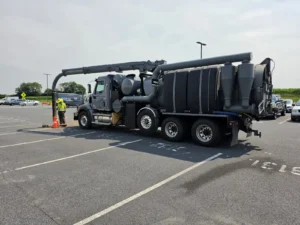
Hydro excavation uses pressurized water to loosen soil and a vacuum system to remove the loosened material. Instead of tearing through the ground with a bucket, we can expose utilities, clean structures, or dig smaller controlled holes with a much lighter touch.
For us at L&N Zimmerman Excavating, hydro excavation is especially valuable on projects where buried utilities are nearby, unknown, or tied into a directional drilling project.
Key Takeaways
Hydro excavation is one of the safest ways to expose buried gas, electric, fiber, water, and sewer utilities before digging or directional drilling. It works well for potholing, utility locating, trenching around private lines, cleaning stormwater structures, and digging holes for bollards, poles, or posts.
Hydro excavation does have limits. It is slower than mechanical excavation and does not work well for large areas, deep trenches, bedrock, hard shale, boulders, or sub-freezing weather.
Slurry removal is part of the job. The vacuum truck may need to haul material away, dump debris, refill with water, and return on larger projects. That can slow things down.
As a general rule, hydro excavation is best for smaller trenching applications. If being used to dig a trench, a realistic size might be about 12 to 18 inches wide, around 3 feet deep, and less than 50 feet long.
What Is Hydro Excavation?
Hydro excavation is a digging method that uses water and vacuum power to remove soil.
The water breaks up the ground. The vacuum pulls the loosened soil and water mixture into a debris tank on the truck. That wet material is called slurry.
The big advantage of hydro excavating is control. It lets us dig carefully around underground lines without using the same brute force as traditional excavation.
That does not mean hydro excavation replaces regular excavating. It means we have another tool for the parts of a job where precision and safety matter most.
Hydro excavation uses pressurized water to loosen soil and a vacuum system to remove the slurry, making it a cleaner and more controlled way to dig around buried utilities.
Why Hydro Excavation Is So Useful Around Underground Utilities
The best use case for hydro excavation is exposing underground utilities before heavier work begins.
This is often called “potholing” or “daylighting.” We open a small, controlled hole so the buried line can be seen, measured, and protected before excavation or directional drilling continues. Utility strikes can get serious fast. A damaged gas line, cut fiber line, broken water main, or severed electric service can create safety hazards, schedule problems, and expensive cleanup.
Hydro excavation helps reduce that risk by giving us a clear look at what is actually in the ground. That is one of the main reasons we use it on projects where existing buried utilities are present. It gives our crew better information before the bigger equipment starts working.
The Best Use Cases for Hydro Excavation
Hydro excavation is not the right method for every digging job, but it is a strong fit for several practical situations.
Potholing Before Excavation or Directional Drilling
Potholing is one of the most common and useful hydro excavation applications.
Before a directional drilling project or even a traditional trenched excavating project, we may need to confirm the exact location and depth of existing gas, electric, fiber, water, or sewer lines. Hydro excavation can expose those lines safely so the drilling path or excavation plan can be adjusted around real field conditions. Paint marks and utility maps are helpful, but seeing the utility with your own eyes is better.
Working Around Unknown Private Utilities
Public utilities are usually marked through the normal utility locating process. Private utilities can be trickier.
A property may have private electric lines, drainage lines, sewer laterals, water lines, irrigation, or other underground systems that are not clearly marked. Hydro excavation can be a good fit in those areas because it minimizes damage and keeps ground disturbance more contained.
That is a big deal on sites where we know something may be underground but do not know exactly what or where.
Cleaning Stormwater Inlets and Structures
Hydro excavation is also useful for cleaning stormwater inlets, catch basins, and drainage structures.
Over time, silt and debris can collect inside those structures and reduce flow. A vacuum truck can remove that buildup and help restore drainage without tearing up a larger area than needed.
This is a practical, no-nonsense use of hydro excavation that often gets overlooked.
Excavating for Bollards, Poles, and Posts
Hydro excavation can work well for digging holes for bollards, poles, posts, and similar structures. These jobs often need a clean hole in a specific location. Hydro excavation can remove soil in a controlled way without opening up more ground than necessary.
That’s especially helpful when the hole needs to be dug near pavement, utilities, buildings, or other finished areas.
How Hydro Excavation Works With Directional Drilling
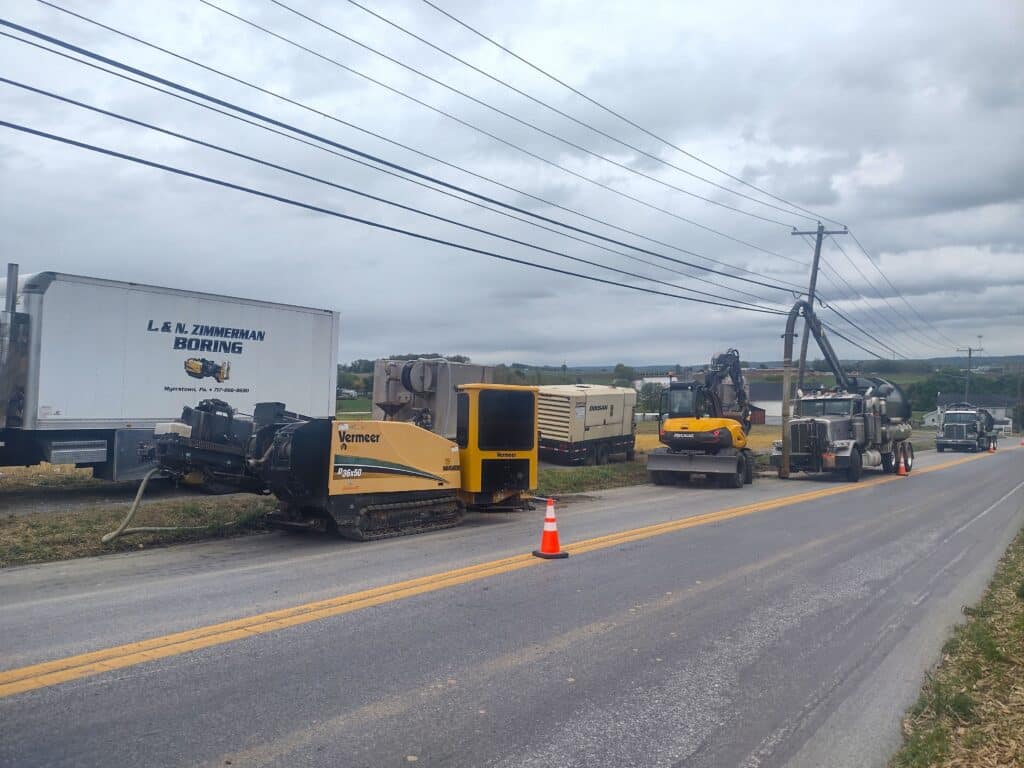
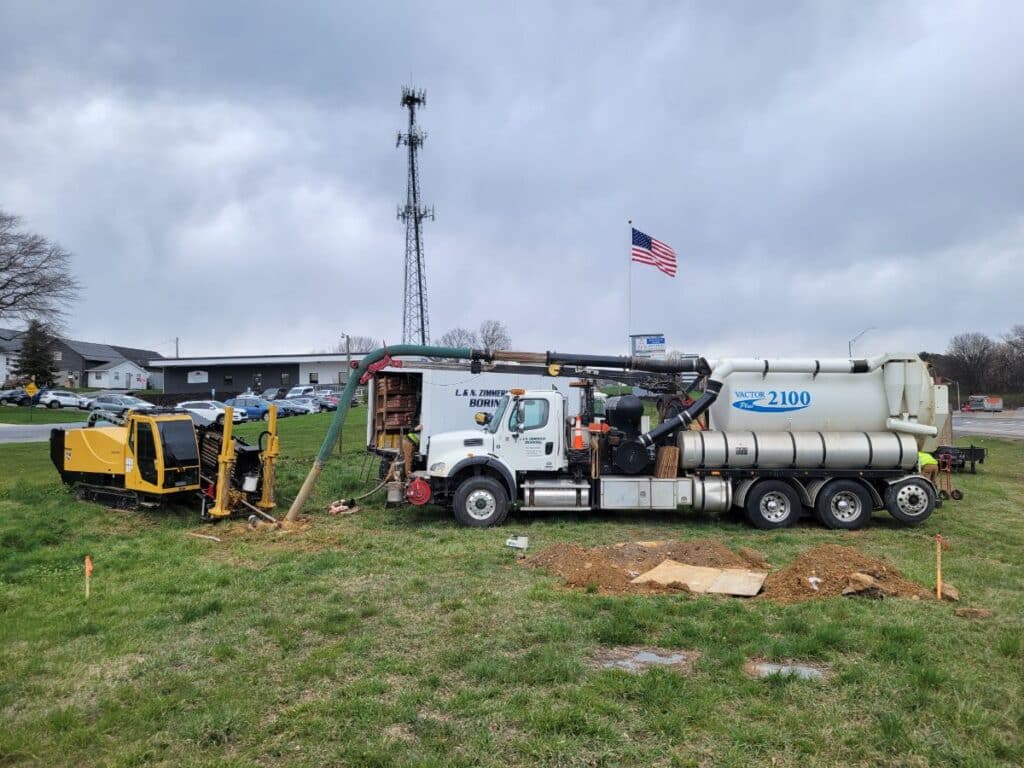
Hydro excavation and directional drilling often work together on our jobsites.
On directional drilling projects, we may use hydro excavation to expose existing utilities before the bore begins. This helps us see what we are working around instead of relying only on marks and assumptions.
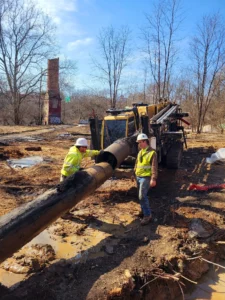
Hydro excavation may also be used during the job to manage slurry. Directional drilling creates drilling fluid and slurry that has to be handled properly. The vacuum truck can remove that material from the work area and haul it to a dump site or move it to a suitable area on the project site.
That makes hydro excavation part of the overall project workflow, not just a separate digging service.
What Happens to the Mud and Slurry?
Hydro excavation creates slurry because water is used to loosen the soil.
That slurry is vacuumed into the truck’s debris tank. After that, it has to be handled based on the project, site access, and disposal options.
On a typical project, the slurry may be:
Hauled to a dump site
Moved to an approved area on the job site
Reclaimed on site when the project setup allows it
Reused in the HDD process when the slurry portion is suitable
On larger jobs, the vacuum truck may need to leave the site to dump debris and refill with water. Then it returns and keeps working.
That is why hydro excavation planning includes more than the hole itself. We have to think through water access, truck capacity, dump access, site conditions, and how many trips may be needed.
How Large of an Area Can Hydro Excavation Handle?
Hydro excavation is best for controlled digging, not large-scale earthmoving.
Every project is different, but as a general rule, hydro excavation is most practical for smaller trenching applications. If it is being used to dig a trench, a realistic size might be about 12 to 18 inches wide, around 3 feet deep, and less than 50 feet long.
That does not mean every job fits that exact range. Soil conditions, utility congestion, water supply, disposal access, and depth all affect production.
But if the job calls for a large excavation area or a deep trench, traditional excavating will often be the better, faster, more cost-effective method.
The Limitations of Hydro Excavation
Hydro excavation is useful, but it has clear limits.
We would rather be upfront about those limits than pretend one method works for every job.
1. Hydro Excavation Is Slower
Hydro excavation is slower than mechanical digging. That slower pace is worth it when the goal is to expose utilities safely or work in a sensitive area. But for open excavation, long trench runs, or bulk dirt removal, a regular excavator can move material much faster.
2. It Is Not Built for Large or Deep Excavations
Hydro excavation is not a good fit for large excavation areas or deep trenching. Once trench depths get around 20 feet or more, hydro excavation becomes impractical for most jobs. The deeper and larger the excavation gets, the more difficult slurry removal and production become.
3. Soil Conditions Can Stop the Process
Hydro excavation depends on water breaking up the soil. If we hit bedrock, hard shale, or large boulders, hydro excavation may no longer work. Those materials require different equipment and a different excavation plan.
4. Water Access Is Important
Because the process uses water, the truck needs a water source. If water access is limited, the truck may need to leave the site to refill. That adds time and can affect how the job is scheduled.
5. Slurry Disposal Must Be Planned
The excavated material has to go somewhere. If the site does not have a suitable area for slurry handling or reclamation, the truck may need to haul the material off site. On bigger jobs, that can mean multiple dump trips.
6. Cold Weather Can Be a Problem
Sub-freezing temperatures are a definite limitation.
Hydro excavation uses water, and freezing conditions can create problems with hoses, tanks, roadways, work areas, and the ground itself. In bitter cold, hydro excavation may not be practical.
Hydro Excavation vs. Traditional Excavation
Traditional excavation is better for larger areas, deep cuts, long trenches, and bulk material removal. It is faster, stronger, and more productive when the ground is clear and the job calls for moving a lot of dirt.
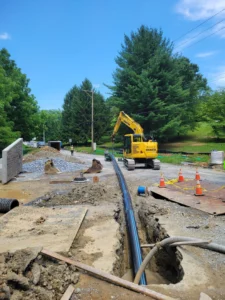
Hydro excavation is better for careful digging around utilities, small controlled holes, stormwater clean-outs, and areas where unknown underground lines may be present. The smartest approach is not picking one method for everything. It is choosing the method that fits the job. For many utility projects, that may mean using hydro excavation to expose sensitive lines, then using traditional excavating or directional drilling equipment for the rest of the work.
Is Hydro Excavation Right for Your Project?
Hydro excavation may be a good fit if your project involves:
Buried gas, electric, fiber, water, or sewer lines
Unknown or unmarked private utilities
Directional drilling near existing infrastructure
Stormwater inlet or structure cleanouts
Bollards, poles, posts, or small controlled holes
Tight areas where ground disturbance needs to stay limited
It may not be the best fit if you need a large excavation, deep trench, long open trench, or digging through bedrock, hard shale, or boulder-heavy ground. That is why it helps to talk through the site before the work begins. A short conversation can save a lot of wasted motion.
Talk With L&N Zimmerman About Hydro Excavation In Central and Southeast PA
If your project involves buried utilities, directional drilling, unknown private lines, stormwater structures, or controlled digging in a tight area, hydro excavation may make the job safer and cleaner.
Our team at L&N Zimmerman Excavating combines hydro excavation, directional drilling, and traditional excavation experience to match the right method to the work.
Wondering if hydro excavation is the right fit for your next project? Contact L&N Zimmerman before the digging starts.
Share
Author
Lavern Zimmerman
Beginning at the age of 17, Lavern cut his teeth in excavating and utility work at BR Kreider & Son, as an equipment operator, then pipe foreman, and lastly to a project supervisor. After 10 years of working with BR Kreider’s excellent team, Lavern joined the L & N Zimmerman family business in 2008, where he serves as a project manager.
HDPE pipe is the best choice for horizontal directional drilling thanks to flexibility, corrosion resistance, and seamless fusion joints, which make it great for underground utility installations of all kinds.
Horizontal directional drilling (HDD) is the preferred method for drilling under a stream without disturbing the waterway or the surrounding environment.
Questions about horizontal directional drilling (HDD)? Learn how far and wide we can drill, about permits, and why boring is often the smarter alternative to trenching.